
An illustrated tribute
The Art of Eight Limbs
Three fighting arts from Southeast Asia: Muay Thai from Thailand, Muay Boran, its older roots, and Lethwei from Myanmar. In each scene below you can make the fighters move, one technique at a time or in combinations.
On the ridge, Malee performs the wai khru ram muay, as fighters do before a bout. Wai is a gesture of respect, khru means teacher (from the Sanskrit guru), ram is dance and muay is boxing. It honours teacher, parents and ancestors, and every camp has its own version. tradition
Muay Thai
Thailand · the art of eight limbs
Thailand · มวยไทย
Muay Thai
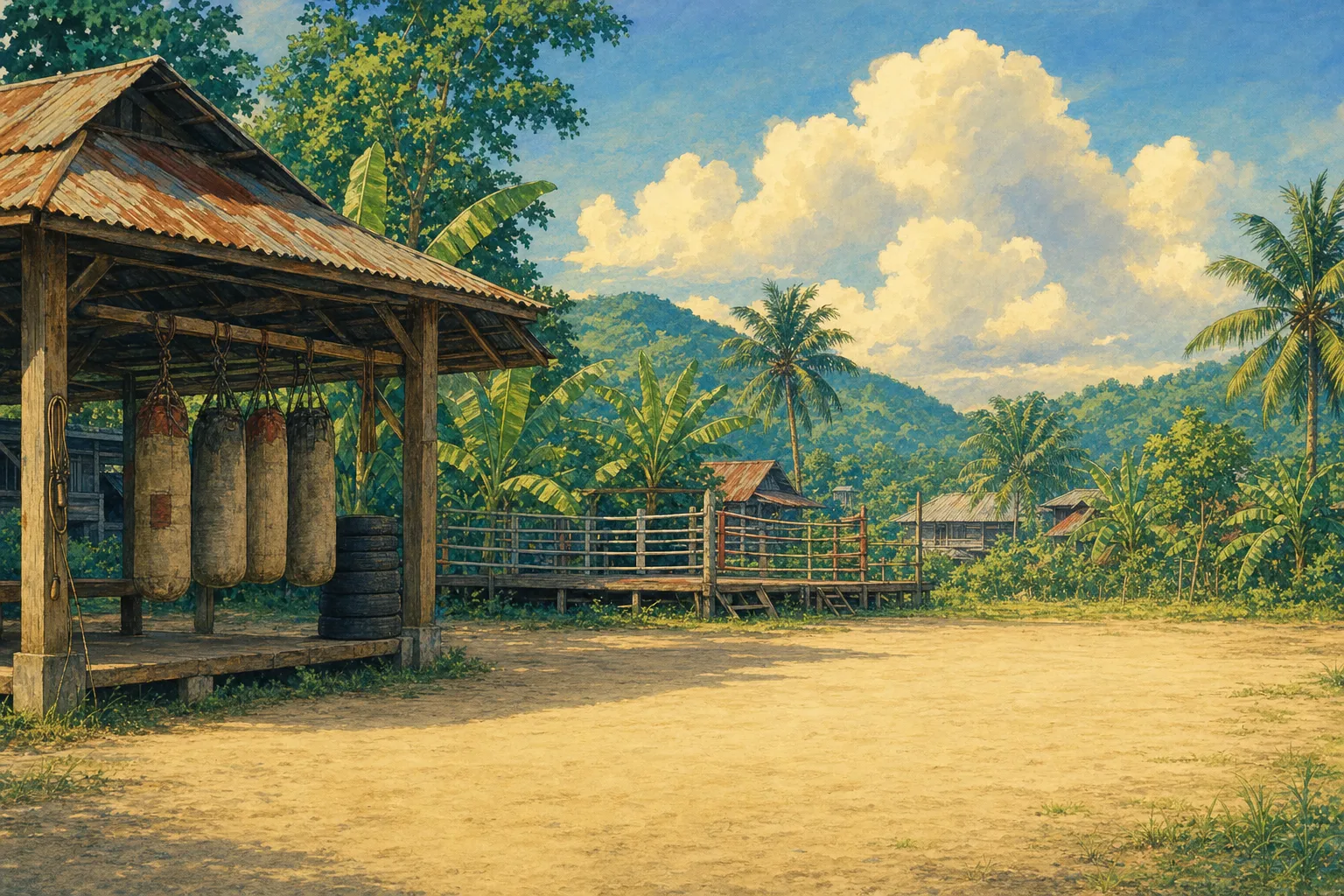
The art of eight limbs: two fists, two elbows, two knees, two shins. Malee trains in the yard of a village camp, on the pads of her trainer, Kru Daeng. Choose a technique or a combination; the Thai names follow a common transliteration, and spellings differ.
Combinations
In the ring, fights are scored on a 10-point-must system, and blocked strikes do not score. modern rules
Muay Boran
Siam · the old boxing, with rope-bound hands
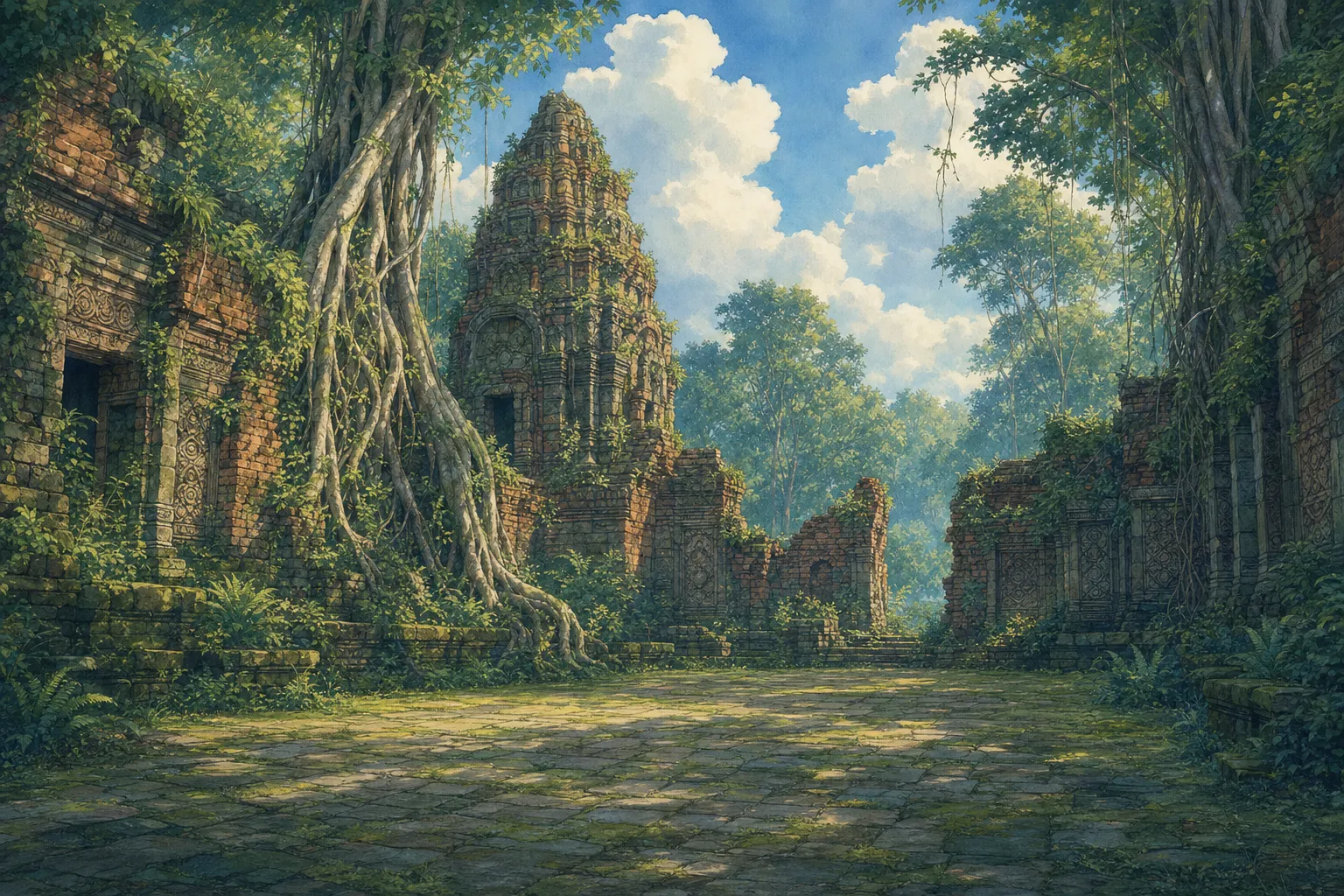
Siam · มวยโบราณ
Muay Boran
"Ancient boxing". As one name for all the older styles it is recent, spread mainly through the writings of Grandmaster Khet Sriyaphai. modern / reconstruction
The regional styles carry the name of their region: Muay Chaiya from Surat Thani, Muay Korat with its strong strikes, Muay Lopburi with speed and feints, Muay Tha Sao with its defence. tradition
Sak fights with his hands bound in hemp rope, khat chueak. Gloves replaced the rope in the late 1920s, after a death in the ring; sources give different years. documented
Combinations
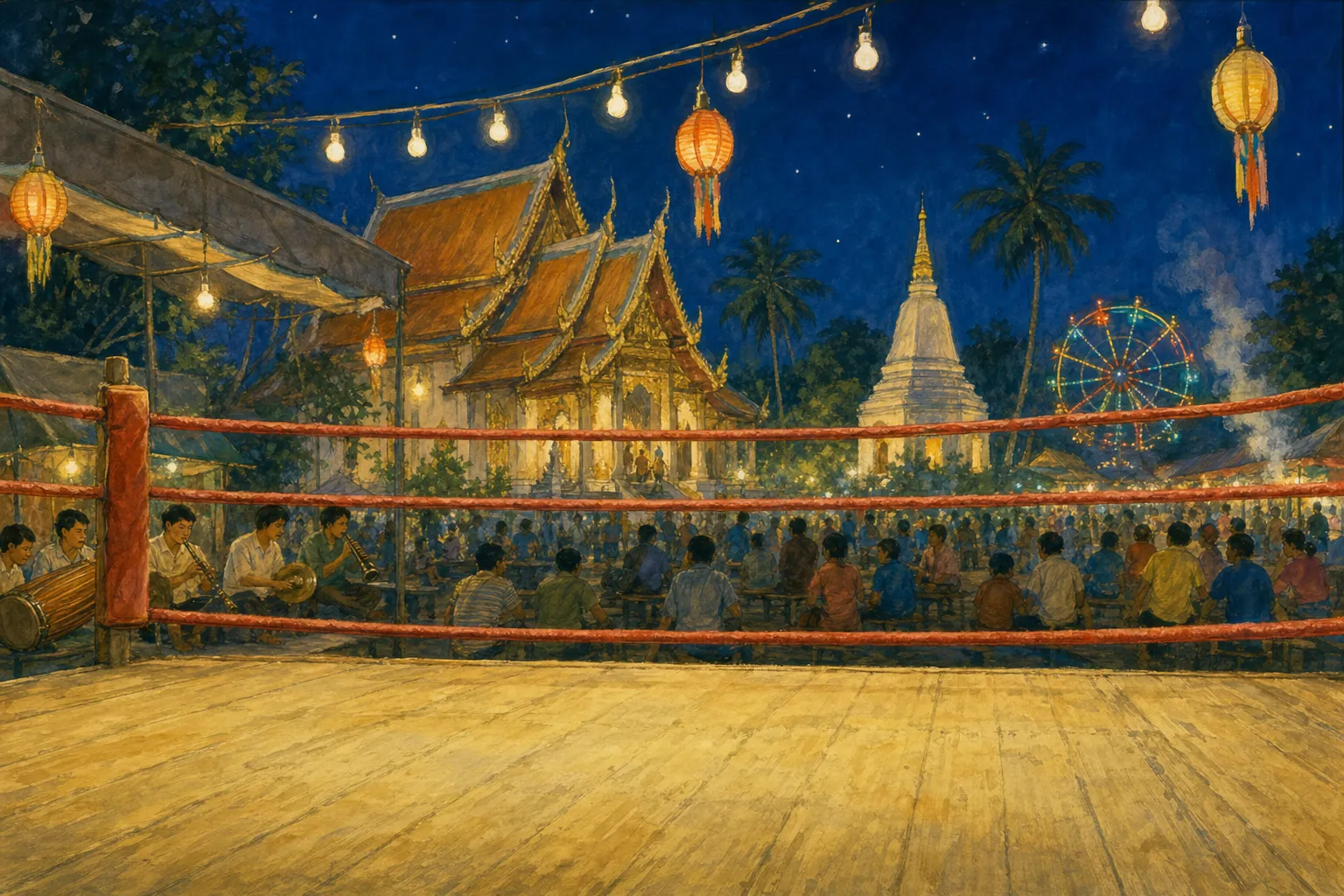
Siam · งานวัด, the temple fair
Sak against Boon
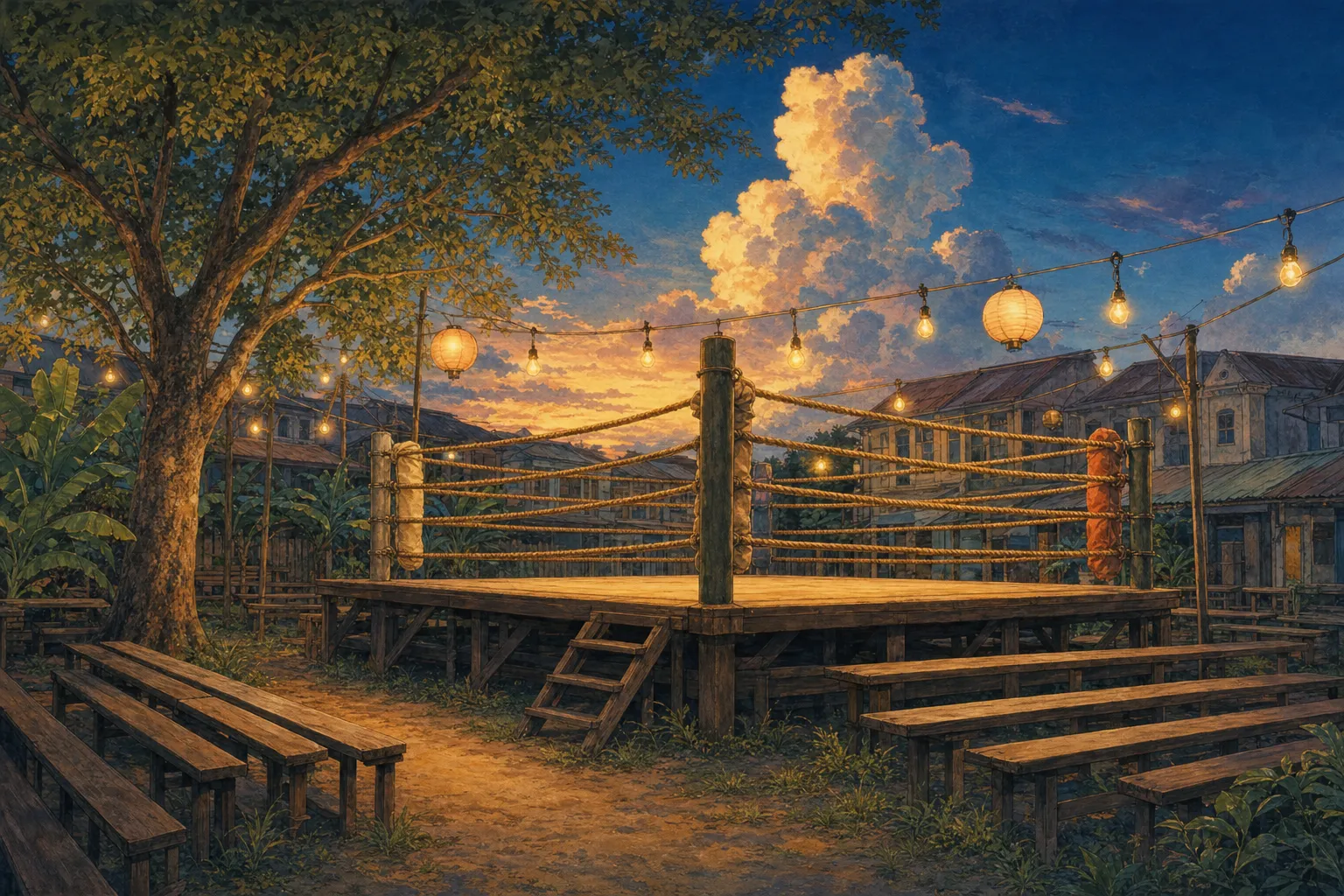
Before there were stadiums, fights were held at temple fairs and festivals, and boxers travelled far to meet an opponent. Many fighters still have their first bouts in makeshift rings at temple fairs. tradition
A well-known story says that King Sanphet VIII, the "Tiger King", fought in disguise at a village fair; he reigned from 1703 to 1709. No source from his time confirms it. tradition
Sak and Boon fight with rope-bound hands, as before the gloves. Choose an exchange, or let the whole fight play.
The whole fight
Lethwei
Myanmar · the art of nine limbs
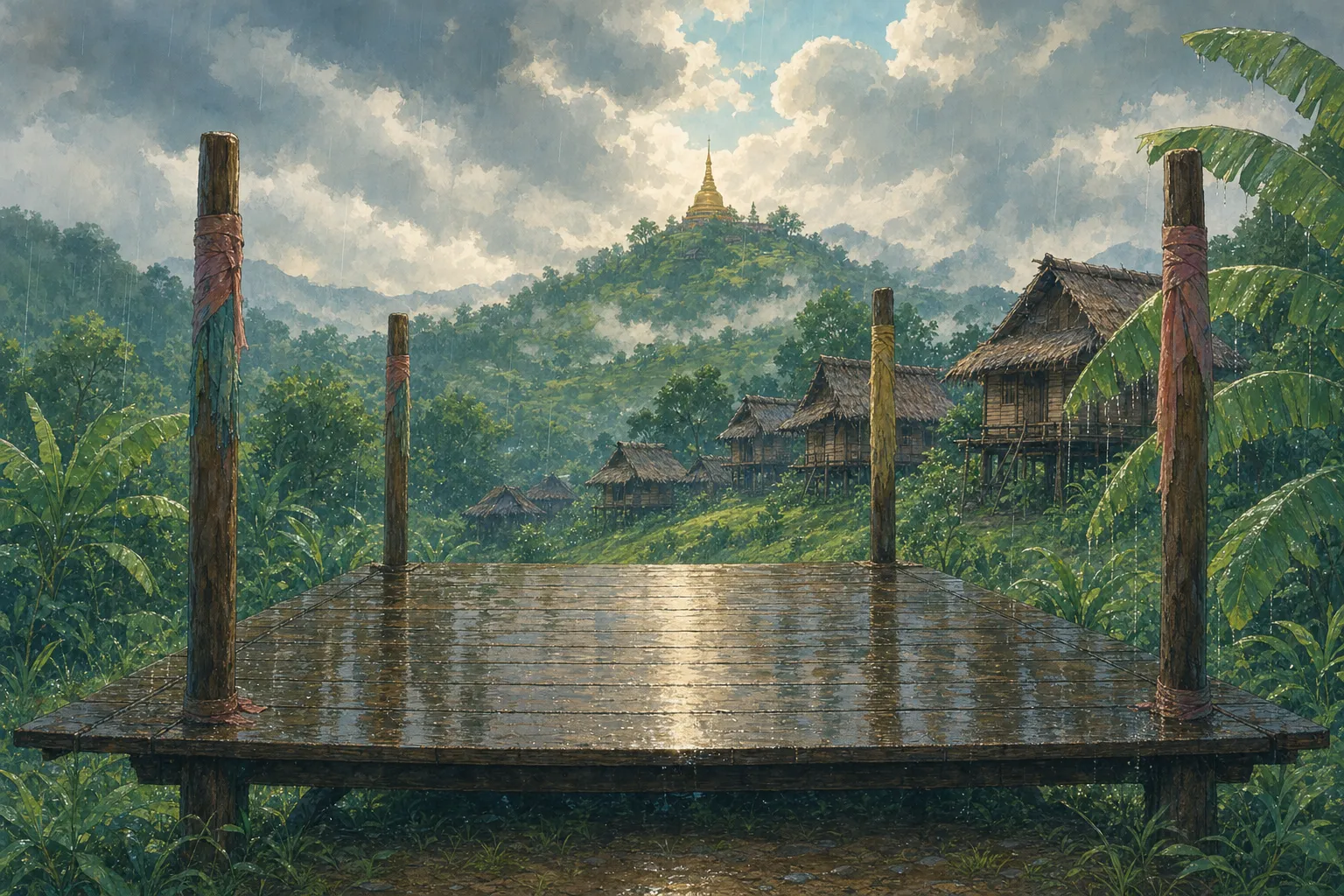
Myanmar · လက်ဝှေ့
Lethwei
Bare-knuckle boxing: hands in tape and gauze, no gloves, and headbutts are allowed. That is why Lethwei is often called the art of nine limbs: the eight of Muay Thai, and the head. modern rules
Thida drills on the shield of her trainer, Ko Min: the rushing headbutt, and the headbutt from the clinch, where one hand pulls the opponent's head in. modern rules
Thida starts with the lekkha moun, the challenge: her right palm claps three times into her bent left arm. The Lethwei yay is the fight dance, before a bout and again after a win. tradition
Under the traditional rules there were no judges: without a knockout, the fight was a draw. Tournament rules today do use judges. tradition / modern rules
Combinations
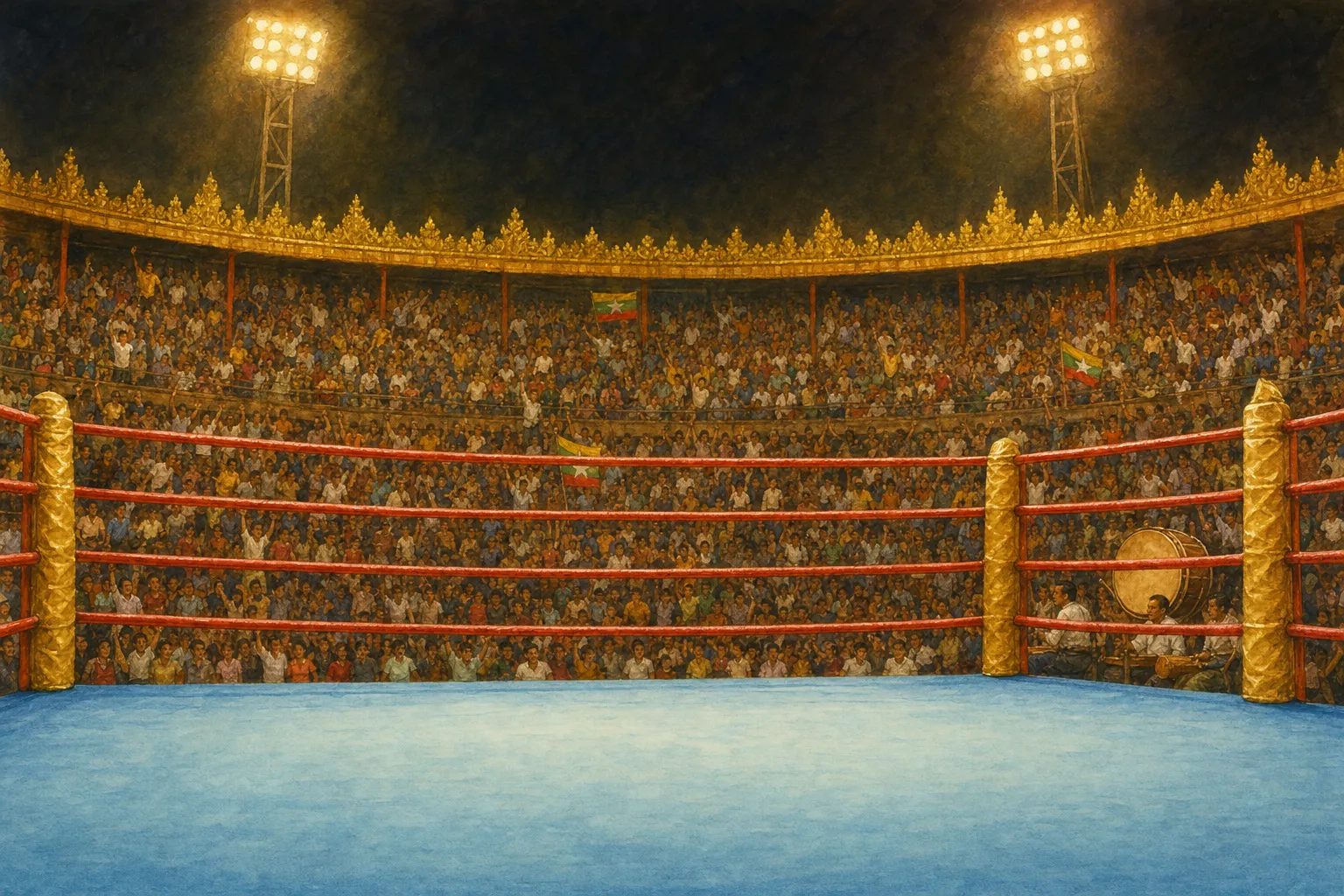
Myanmar · fight night
Thida against Nandar
A Lethwei bout in a full stadium. Under tournament rules a fight has three to five rounds of three minutes, with two-minute breaks, and judges decide when there is no knockout. Women have had their own division at the World Lethwei Championship since 2019. modern rules
Under the traditional rules each corner could call one two-minute timeout to revive a fighter, but not in the fifth round. tradition
The whole round
What we know, and how well
History
Each line says whether it is documented, tradition or modern rules. Where sources disagree, that is said too.
- 1767
When Ayutthaya fell, Nai Khanom Tom was taken captive. The story says he beat about ten Burmese fighters in front of the Burmese king and won his freedom. Historians treat it as a legend, probably shaped in the 20th century. 17 March is celebrated as Muay Thai Day. tradition
- 1921
The first permanent ring, at Suan Kulap College. documented
- late 1920s
Gloves replace the rope-bound hands after a death in the ring. The exact year differs between sources. documented
- 1945
Rajadamnern Stadium holds its first fight on 23 December. documented
- 1956
Lumpinee Stadium opens on 8 December, run by the Royal Thai Army. It moved to a new venue in 2014. documented
- 1996
The Myanmar Traditional Lethwei Federation adds modern rules. modern rules
- 2018
Nou Srey Pov becomes the first female winner at the World Lethwei Championship; a women's division follows in 2019. modern rules
- 2021
The first women's fight inside the Lumpinee ring. Rajadamnern follows on 5 August 2022. In many Thai rings women still enter under the bottom rope; the reason is disputed. documented
- 2021
The IOC fully recognises IFMA, the international Muay Thai federation, on 20 July. Muay Thai is not on the Olympic programme; it has been at the World Games since 2017. modern rules
The music at a Thai fight comes from the pi muay ensemble: the pi Java oboe, a pair of klong khaek drums and the small ching cymbals. The melody starts slow during the wai khru and speeds up with the fight. tradition
Ink that protects
Sacred tattoos
In Thailand many fighters wear sak yant, tattoos believed to protect, often across the back. A monk or an ajarn, a master, sets them, and the designs carry lines of sacred script in Khom, an old Khmer script. The practice grew from animist and Brahmanist belief and was taken into Thai Buddhist culture; it is not part of the Buddha's teaching. tradition
The motifs below are drawn without script. The script in a real yant is sacred, and an image model would only invent it.
-
Twin tigers
Suea koo. Two tigers facing each other, for strength and courage. tradition
-
Nine spires
Gao yord. The nine peaks of Mount Meru, the home of the gods; popular among fighters, often on the upper back. tradition
-
The tiger
Tiger, elephant and monkey figures are said to give strength and fearlessness. tradition
-
Htoe kwin
In Myanmar men were tattooed from the waist to the knee, as a step into manhood and for protection; for Lethwei fighters the tattoos stood for strength and courage. The custom faded in the colonial era; some older fighters still carry them. tradition

Evening
Before and after the fight
All three arts frame the fight with ritual: the wai khru in Thailand, the lekkha moun and the yay in Myanmar. Malee and Thida end the day with them.
How this was made
The eight paintings, the drawings of the fighters, trainers and animals, the gold ornaments of the three emblems and the tattoo motifs were generated once with OpenAI's image model: each character as sheets of four poses, which a script cuts into separate drawings. The names on the emblems, in Thai and Burmese script, were not generated: they are set from the Noto fonts and shaped with HarfBuzz, because an image model cannot be trusted to write those scripts. The page itself calls no AI service. The animation (drawings held and switched, as in hand-drawn animation, with steps, a brief freeze on every strike and a ghost of the previous drawing), the partners' reactions, the crowd, the weather and the strike effects are drawn in the browser on a canvas. Music and sound are synthesised live with the Web Audio API, inspired by the pi muay ensemble but not taken from it. Malee, Sak, Boon, Thida, Nandar, Kru Daeng and Ko Min are invented characters. The animals live in the region: the Asian elephant, Thailand's national animal, the great hornbill, the long-tailed macaque, the water buffalo and the green peafowl, a national symbol of Myanmar.